Why Chase Bank Is Closing All Branches for 24 Hours - The Real Reason Behind Americas Sudden Banking Shutdown
Chase Bank is set to halt services across thousands of U.S. branches for 24 hours, triggering nationwide concern. Here is what is really happening, how Wells Fargo fits in, and what customers should expect next.
Chase Bank Sparks Nationwide Attention With 24 Hour Branch Closure
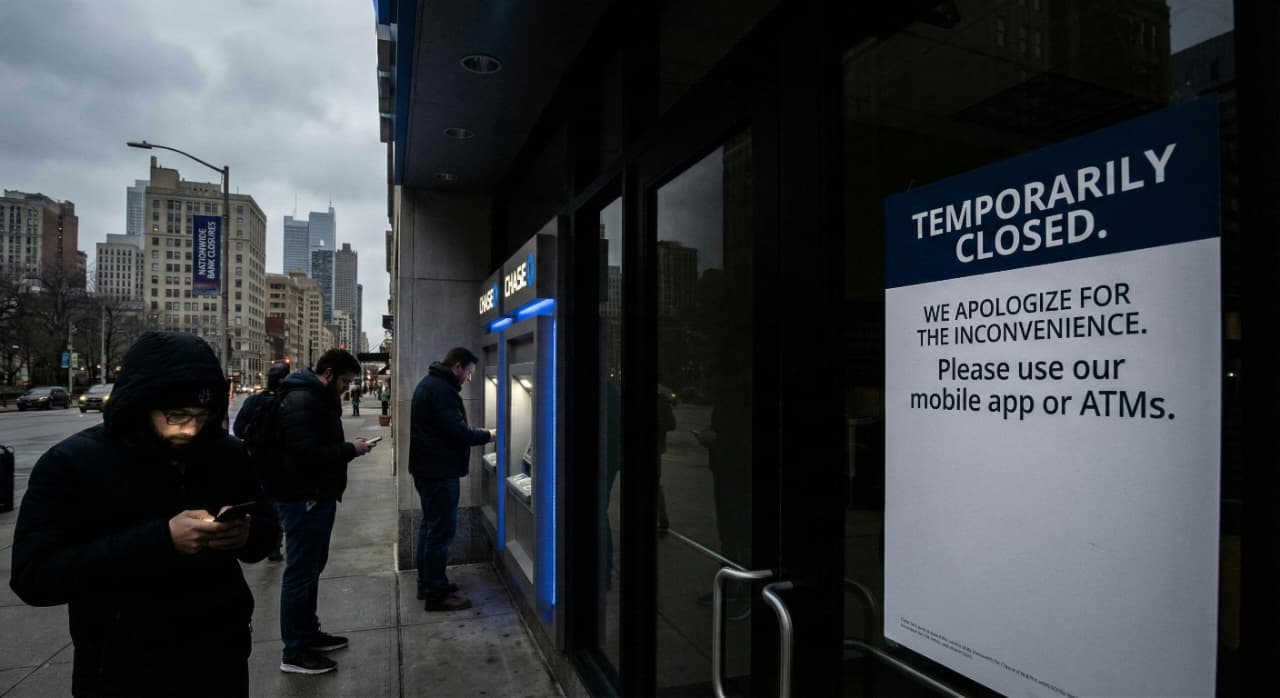
Chase Bank has quickly become a top trending topic across the United States after reports confirmed that thousands of its branches will suspend in person services for a full 24 hours. With more than 5,300 locations affected, the announcement has raised questions among customers, investors and regulators about the stability and direction of the American banking system.
The closure is scheduled as a coordinated, nationwide pause rather than a gradual or regional shutdown. While digital banking services are expected to remain operational, the scale and timing of the move have fueled speculation and concern across social media and financial forums.
Why Banks Are Pausing Physical Operations Nationwide
The decision to close branches for a full day is tied to operational restructuring rather than financial distress. Major banks increasingly rely on centralized digital infrastructure, and nationwide pauses allow institutions to update internal systems, conduct audits and align compliance processes without regional inconsistencies.
This trend is not isolated to Chase. Other major banks, including Wells Fargo, have confirmed similar one day nationwide shutdowns of physical branches. The coordinated timing suggests an industry wide shift toward modernized banking infrastructure rather than an isolated corporate decision.
What Customers Can and Cannot Do During the Closure
During the 24 hour closure, customers will not be able to access in branch services such as teller transactions, account opening or in person consultations. However, online banking, mobile apps, ATMs and card payments are expected to continue functioning normally.
Banks are increasingly encouraging customers to rely on digital channels for everyday transactions. This closure highlights how physical branches are becoming secondary to digital platforms in modern banking operations across the United States and other developed markets.
Wells Fargo and the Bigger Banking Pattern
Wells Fargo has confirmed that all of its U.S. branches will also close for a single day in January, reinforcing the idea that this is part of a broader banking industry reset. Rather than providing backup services for Chase customers, banks are moving in parallel, suggesting shared regulatory or infrastructure objectives.
Similar shifts are already visible in global banking hubs. In the United Kingdom and parts of Asia, including China, banks have reduced physical branch reliance while expanding digital and automated services. The United States now appears to be accelerating along the same path.
What This Means for Banking in 2026
The Chase Bank closure is a clear signal of where the banking industry is heading. Physical branches are no longer the primary access point for financial services. Instead, banks are prioritizing technology driven systems that allow faster updates, lower costs and greater scalability.
For customers, this means adapting to a future where digital access is essential. For investors and policymakers, it highlights a structural transformation that will shape how financial institutions operate in 2026 and beyond.
This article is for informational purposes only and does not constitute financial advice. Banking operations and service availability may vary by institution and location.