Tax Refund Surge + Oil Market Shock - Will 2026 Spark a Consumer Boom and a Big Break for Exxon Mobil and U.S. Markets?
Explore how the 2026 U.S. tax refund surge could reshape consumer spending, influence stock trends, and ignite seismic shifts in energy markets - including Exxon Mobil'slatest moves amid geopolitical tension and Venezuela oil uncertainty.
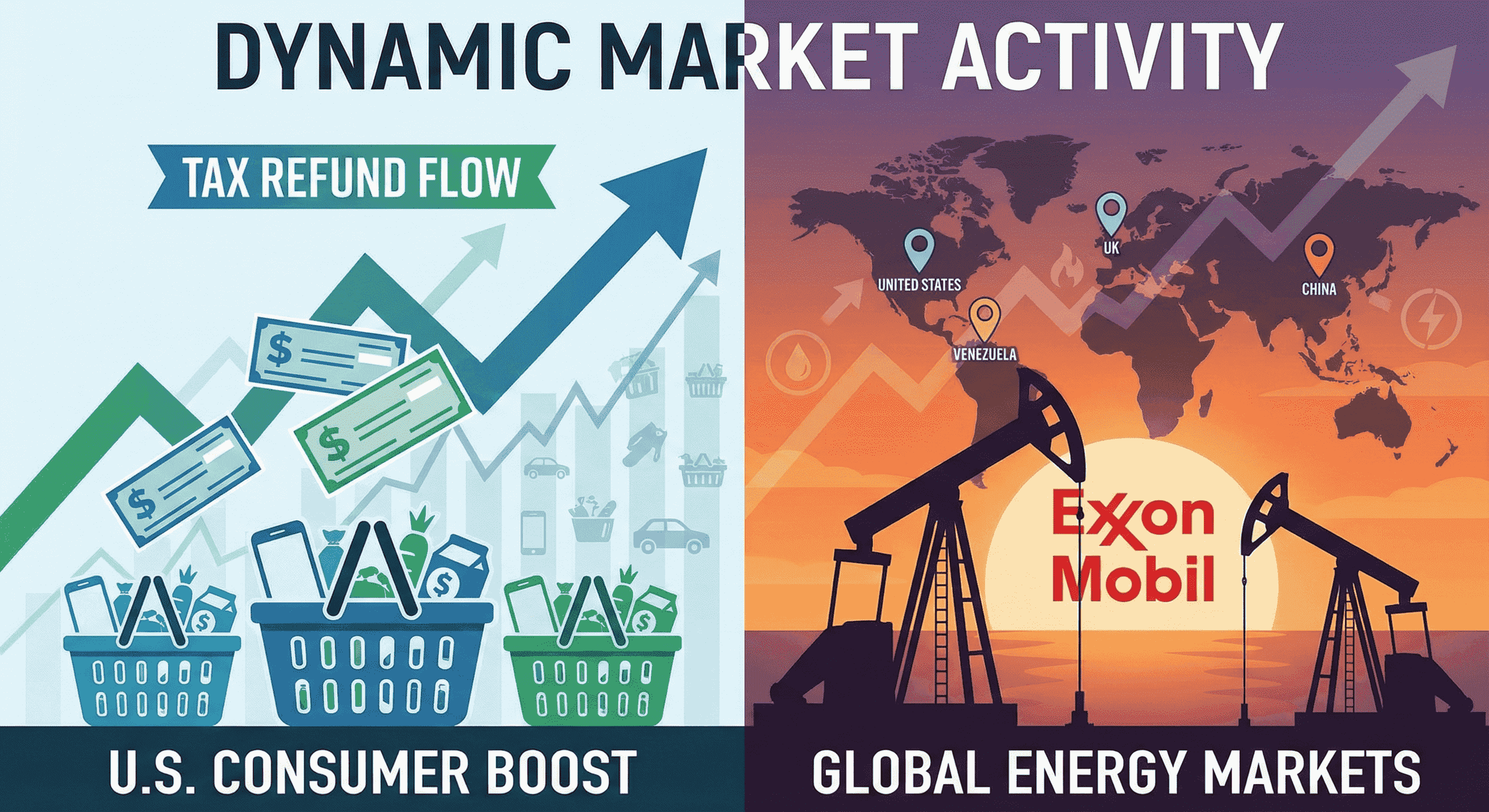
The 2026 Tax Refund Trend Ignites Consumer Markets and Shakes Energy Stocks
The beginning of 2026 has ushered in a powerful and underreported catalyst sweeping through U.S. markets - a significant surge in tax refunds and after-tax income, sending ripples across consumer spending, equities, and commodity sectors. This trend, rooted in major fiscal policy changes to the U.S. tax code, is expected to generate one of the most consequential waves of discretionary spending seen in years, and investors are just starting to price it in.
Recent analyses show that expanded refund provisions will mean larger refund checks flowing to millions of Americans, with economists estimating total household boosts approaching hundreds of billions in early 2026. These are more than refunds - they represent fresh income and spending power hitting the economy at a moment when growth has been sluggish and inflation pressures still loom large.
Why Consumers, Retail Markets and Stocks Should Pay Attention
Historically, tax refunds act as a catalyst for discretionary purchases - from electronics and travel to vehicles and dining. Retailers have learned to time promotions to refund cycles, and financial services firms optimize capital strategies based on projected refund timing. With tax refund surges expected across income brackets in 2026, retail inventories and digital payments are poised for a dynamic shift.
Retailers like Target and Best Buy previously saw double-digit sales increases when refunds released earlier than expected, and similar patterns could emerge again. Meanwhile, banks and fintechs are adjusting capital allocation - moving into higher-yield assets in anticipation of inflationary pressures, and offering more flexible credit products to meet consumers flush with refund cash.
Tax Refunds and Market Volatility - The Link You Cant Ignore
While consumer spending may be poised for acceleration, investors should brace for an increase in market volatility. Large tax refunds can fuel rapid rotations within equity markets, as investors rebalance portfolios toward sectors poised to benefit from enhanced spending. Luxury goods, premium retail, travel and high-end service sectors could see outsized gains if wealthy taxpayers receive substantial refunds.
At the same time, historical precedent suggests that early boosts to GDP and consumption are often short-lived and may be followed by broader market reassessment or pullback as investors digest the longer-term implications on inflation, interest rates and corporate earnings.
A Parallel Story - Exxon Mobil Hits the Spotlight
Amid this backdrop of potential fiscal stimulus, one corporate storyline gaining traction is Exxon Mobil. Energy markets have shown renewed volatility and interest in U.S. majors following geopolitical tensions in Venezuela and aggressive policy stances from Washington that impact global crude markets. Recent reports show Exxon strengthening relative to the broader market, with shares rising on sector optimism tied to oil price reactions and political developments.
President Trump and U.S. policymakers have signaled tougher measures around Venezuela, including tariffs on oil buyers that could recalibrate global supply chains and benefit domestic producers. This has prompted investor interest in Exxon and other energy leaders as global supply constraints potentially elevate prices and widen refining margins.
However, some analysts caution that sentiments may be mixed, citing structural challenges in reviving Venezuelan production and broader oil market dynamics that could temper short-term gains. The infrastructure and capital required to ramp up output remain significant hurdles, complicating how quickly geopolitical actions translate into profits for energy majors.
Consumer Trends, Geopolitics and the 2026 Investment Landscape
What makes this period unique is the convergence of macroeconomic forces: a surge in disposable income from tax refunds, shifts in interest rate expectations, ongoing inflation concerns, and geopolitical pressures shaping commodities and currency markets. Investors in the United States, China, the UK and beyond are watching how these elements interplay.
Oil market watchers are especially attuned to crude price movements and sector rotation away from overvalued growth stocks toward value-oriented plays like energy and financial services. Meanwhile, consumer staples and discretionary stocks may experience divergent performance as spending patterns evolve through the first half of 2026.
This article is for informational and educational purposes only and does not constitute financial advice. Market conditions and fiscal policies can change rapidly. Investors should conduct their own analysis and consult with financial professionals before making investment decisions.