Why Gen Z Is Abandoning Instagram and TikTok for Anonymous Apps - The 2026 Social Media Revolution Sweeping College Campuses in United States, UK and Beyond
Discover why millions of Gen Z students across the United States, UK, and global campuses are ditching curated Instagram feeds for anonymous social apps like Fizz. Learn how this 240-campus platform is challenging TikTok and Instagram's dominance in 2026.
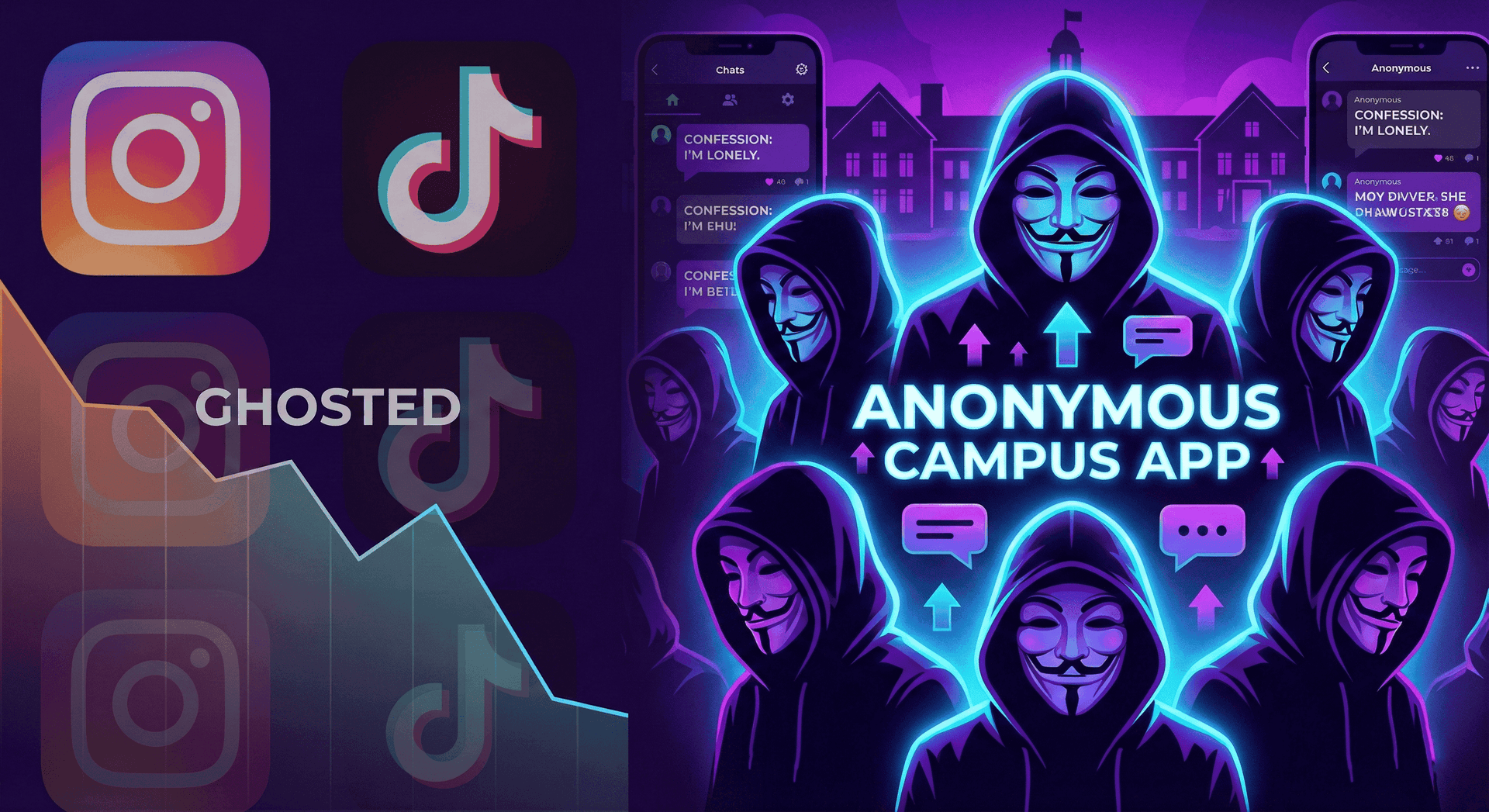
The Silent Revolution: Why Gen Z Is Ditching Instagram for Anonymous Campus Apps
Something remarkable is happening on college campuses across the United States in 2026. While Instagram and TikTok continue to dominate global download charts, a quieter revolution is taking place in dorm rooms from Stanford to Harvard, and increasingly across universities in the United Kingdom and beyond. Students are abandoning the polished, performance-driven social media that defined the 2010s and early 2020s in favour of something radically different: anonymity. At the center of this seismic shift stands Fizz, an anonymous social app that has quietly become what its CEO calls the biggest college social platform since Facebook itself.
From Pandemic Frustration to Campus Domination
The story of Fizz begins not with a Silicon Valley brainstorming session, but with two Stanford students trapped in their dorm rooms during the pandemic. Teddy Solomon and Ashton Cofer, frustrated by the limitations of existing group chats and the performative nature of mainstream social media, wanted to create something fundamentally different. What started as a solution to connect isolated college students during remote learning has exploded into a cultural phenomenon operating on 240 college campuses and 60 high schools across the United States. The app has raised an impressive 41.5 million dollars in funding, signaling that investors believe this is not just another flash-in-the-pan social experiment, but a genuine paradigm shift in how young people want to connect online.
The Performance Problem: Why Instagram and TikTok Lost Gen Z's Trust
To understand why Fizz is winning, you first need to understand what Gen Z has grown tired of. Solomon argues that platforms like Instagram and TikTok have evolved from social networks into pure entertainment platforms. The numbers back him up in striking fashion. Research from 2025 shows that only 7 percent of content consumed on Instagram now comes from friends. Think about that for a moment. A platform designed to help you share photos with people you know has become a place where 93 percent of what you see comes from strangers, influencers, and brands. TikTok, meanwhile, has become an algorithmic entertainment machine where the pressure to create viral content has replaced genuine social connection.
The statistics paint a troubling picture of Gen Z's relationship with mainstream social media in 2026. Studies reveal that 66 percent of Gen Z users report social media negatively impacts their mental health, with Instagram and TikTok most strongly associated with negative self-image, particularly among females aged 13 to 20. Perhaps most telling, 55 percent of Gen Z took at least one social media detox in the past year, attempting to escape the anxiety and digital fatigue these platforms create. Even more striking, 41 percent of Americans are actively reducing their screen time in 2025, with Gen Z leading this conscious disconnection despite spending more time online than any other generation. The platforms that promised connection have become sources of stress, comparison, and curated fakery.
The 99 Percent of Life That Instagram Misses
Fizz operates on a radically simple premise that feels revolutionary precisely because it is so obvious. Most of life is not Instagram-worthy. The late-night cramming for exams, the anxiety about upcoming presentations, the casual observations about dining hall food, the questions about where to find affordable textbooks, the honest discussions about loneliness and stress. This is the 99 percent of college life that never makes it into highlight reels, yet it is exactly this unfiltered reality that creates genuine community. By allowing students to post anonymously within their campus community, verified only by their university email address, Fizz has created digital spaces where students can be honest without fear of judgment or permanent reputation damage.
The contrast with traditional social media could not be starker. On Instagram, you curate. On TikTok, you perform. On Fizz, you simply share. The app features three main feeds: New, which displays recently created posts; Top, which features posts with the most all-time upvotes; and Fizzin, which showcases posts currently receiving high engagement. This simple structure, combined with complete anonymity, has unlocked something that billion-dollar platforms have been unable to replicate: authentic conversation among peers who actually know each other's context.
Learning From History: The Ghost of YikYak
Fizz is not the first anonymous campus app to capture student attention, and the founders know it. YikYak, which launched in 2013, experienced meteoric growth before crashing spectacularly. At its peak, YikYak was valued at over 350 million dollars and operated on more than 1,000 college campuses across the United States and United Kingdom. Then came the cyberbullying, the racist posts, the threats of violence, and the complete inability to moderate anonymous content at scale. By 2017, YikYak had shut down entirely after user downloads fell 76 percent in a single year. The platform became synonymous with the dark side of anonymity, remembered as a cautionary tale rather than a social media success story.
The lessons from YikYak's collapse have shaped every aspect of how Fizz operates in 2026. Solomon and his team have made content moderation their absolute core focus, implementing a three-tier system that represents the most sophisticated approach to anonymous content management seen to date. First, artificial intelligence powered by OpenAI technology removes more than 75 percent of rule-violating content before it ever appears in feeds. Second, a dedicated central Trust and Safety team of full-time professionals monitors all 240 communities using custom quantitative methods to detect spikes in reports or violations. Third, and perhaps most importantly, Fizz employs 7,000 volunteer student moderators across its campuses, hand-selected based on good behavior and trained extensively before receiving moderation powers. No single moderator can unilaterally remove content, and the central Fizz team always retains final authority.
This commitment to safety is not just rhetoric. Fizz has voluntarily shut down two of its own communities after receiving feedback from parents and administrators about toxic behavior. It is a remarkable admission of responsibility in an industry where platforms typically resist any accountability until forced by regulation or public outcry. Yet even with these extensive safeguards, the challenge of moderating anonymous content remains immense. As one researcher who studied YikYak noted, if hate speech dominates a campus Fizz feed, it likely indicates the parallel presence of that toxicity in the physical campus environment. Anonymity does not create problems, it reveals them.
Beyond Social: Fizz's Expansion Into Campus Life
What separates Fizz from YikYak's ghost is not just better moderation, but a more thoughtful vision of what an anonymous campus platform can become. In 2024, Fizz added a marketplace feature where students can buy and sell items like textbooks, furniture, and electronics entirely within the app. By September 2025, the platform had expanded further into grocery delivery through a partnership with Gopuff, allowing students to order late-night snacks or weekly groceries delivered in as fast as 15 minutes. These features transform Fizz from a simple chat app into an essential utility for campus life.
The marketplace strategy directly challenges Facebook, which has seen enormous success with Facebook Marketplace despite Gen Z largely abandoning the main Facebook platform. In fact, Facebook Marketplace now has four times the monthly users of Amazon for certain categories and is rapidly approaching eBay as the top resale platform in the United States. Nearly half of Gen Z, 49 percent, still uses Facebook primarily for this marketplace feature. Fizz is betting that Gen Z's love of secondhand shopping and sustainable consumption, combined with the trust of dealing with verified classmates, will make their hyperlocal marketplace superior to Facebook's sprawling, often sketchy listings.
The Global Picture: Social Media's Identity Crisis in 2026
Fizz's rise is part of a broader identity crisis gripping social media globally in 2026. TikTok remains the most used platform among Gen Z, with 83 percent of users logging in daily, yet even TikTok's growth is slowing as users grow frustrated with increased advertising and the controversial TikTok Shop feature that many feel ruins the user experience. Instagram usage among Gen Z has declined 9 percent year over year, with engagement rates dropping as the platform prioritizes Reels over photos and fills feeds with recommended content from strangers. YouTube maintains strong engagement for long-form content, but short-form video fatigue is beginning to set in across all platforms.
The numbers reveal a generation in search of something different. While Gen Z spends an average of 4.5 hours daily on social media, more than any generation before them, they increasingly report dissatisfaction with how that time is spent. Only 3 percent spend less than one hour per day on social media, suggesting an almost compulsive relationship with these platforms. Yet 33 percent report wanting to be less engaged with social media, creating a tension between habit and desire. Perhaps most significantly, platforms like Discord and Reddit are growing rapidly among Gen Z precisely because they offer community-focused spaces rather than performance-driven feeds.
What This Means for the Future: From China to Campus
The success of Fizz has not gone unnoticed by the tech giants. Facebook has already launched Rooms, a direct response to anonymous apps blowing up on campuses. Meta is acutely aware that it lost an entire generation to competitors once before and is desperate not to let it happen again. In China, where social media operates under different rules and regulations, similar hyperlocal and community-focused platforms are gaining traction among students who crave spaces for authentic expression. The United Kingdom has seen particularly strong adoption of anonymous campus apps, with Fizz and competitors like Jodel finding enthusiastic audiences at British universities.
The implications extend far beyond college students. If Gen Z is abandoning performance-based social media in favor of anonymous, community-focused platforms, it suggests a fundamental rethinking of what social media should be. The era of accumulating followers, crafting personal brands, and measuring self-worth through likes and comments may be ending, at least for the generation that grew up most immersed in it. What replaces it could look more like the early internet: pseudonymous, text-based, focused on shared interests and genuine discussion rather than curated identities and parasocial relationships with influencers.
The Challenges Ahead
Fizz's path forward is far from guaranteed. Anonymous platforms have crashed before, and content moderation at scale remains an unsolved problem even for companies with billions in resources. The app has already faced criticism and bans at some institutions. The University of North Carolina announced plans to block anonymous apps including Fizz from its 16 campuses, citing concerns about student safety and wellbeing. Several high schools have experienced serious incidents where Fizz communities devolved into cyberbullying and harassment before being shut down. The delicate balance between fostering authentic expression and preventing harm will define whether Fizz becomes the next Facebook or the next YikYak.
There is also the question of monetization. Unlike Facebook, Instagram, or TikTok, Fizz does not serve advertisements and has shown limited interest in immediate revenue generation, focusing instead on growth. With 41.5 million dollars in venture funding, the company has runway to experiment, but investors will eventually demand returns. Can an anonymous platform built on trust and authenticity introduce advertising without destroying the very qualities that make it special? Can it expand beyond college campuses to reach the scale necessary for venture-backed success? These questions will determine Fizz's ultimate fate.
The Bigger Question: What Do We Actually Want From Social Media?
The Fizz phenomenon forces a confrontation with uncomfortable truths about modern social media. If millions of young people prefer posting anonymously to verified peers over broadcasting their lives to thousands of followers, what does that say about Instagram and TikTok? If students find more value in discussing exam stress and dining hall complaints than in consuming professionally produced entertainment content, what does that reveal about the platforms that generate billions in revenue from Gen Z's attention?
Solomon argues that social media has stopped being social, and the evidence increasingly supports him. When only 7 percent of Instagram content comes from friends, when TikTok's algorithm shows you videos from strangers rather than people you follow, when Facebook is primarily a marketplace rather than a way to connect with classmates, can we still call these platforms social networks? Or have they become something else entirely: entertainment platforms with social features, algorithmic content machines optimized for engagement rather than connection, advertising delivery systems dressed up as communities?
The defining feature of social media in 2026 may be its identity crisis. Platforms built to connect us have instead made us perform, compare, and consume. Fizz and apps like it suggest Gen Z is not rejecting digital connection but the specific form that connection has taken. They want the internet to feel smaller again, more local, more honest. They want community without the need to curate, conversation without the pressure to go viral, and authenticity without the permanent record of a personal brand. Whether anonymous apps can deliver on this promise at scale remains the open question, but the demand is undeniable.
As we move deeper into 2026, the battle for Gen Z's attention is being fought not between Instagram and TikTok, but between performance and authenticity. Fizz represents a bet that young people would rather share their real lives with people who understand their context than broadcast highlight reels to an audience of strangers. It is a vision of social media that looks backward to forums and early Facebook while incorporating the lessons of a decade of social media chaos. Whether this vision succeeds or fails will tell us much about what Gen Z truly values, and perhaps what we have lost in the pursuit of social media fame.
For now, in dorm rooms across the United States, United Kingdom, and increasingly worldwide, students are opening an app where nobody knows their name, and finding that anonymity, properly designed and carefully moderated, can create the kind of community that Instagram and TikTok's billions of users can no longer find. That might be the most significant development in social media since a Harvard student launched a website called TheFacebook twenty years ago. The irony that the next generation is rejecting everything Facebook became would surely not be lost on Mark Zuckerberg, who once said he wanted to make the world more open and connected. Gen Z is trying to do exactly that. They have just decided that real names and public performance are obstacles rather than requirements.