AOL Just Went Dark Across the United States - What This Sudden Outage Reveals About Aging Internet Giants in 2026
Millions reported problems accessing AOL and Yahoo services within hours. The outage exposed deeper cracks in legacy internet infrastructure that still powers daily communication worldwide.
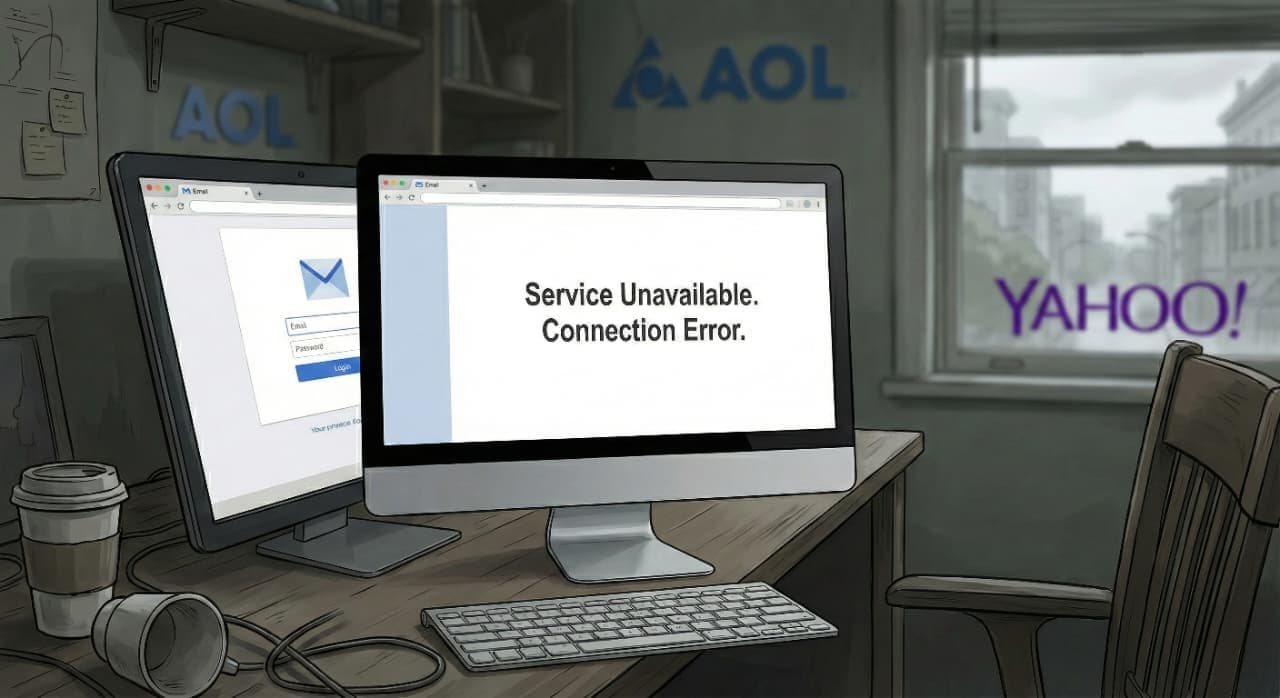
AOL Outage Sparks Widespread Disruption Across the United States
A sudden outage affecting AOL services triggered a surge in user complaints across the United States, with thousands reporting problems accessing email, news portals, and account logins. The disruption also appeared to overlap with service instability on Yahoo, highlighting how deeply interconnected these legacy platforms remain despite operating under modern corporate structures.
Reports began surfacing rapidly as users encountered blank inboxes, failed logins, and delayed message delivery. For many, AOL mail remains a primary communication tool for banking alerts, healthcare updates, and business correspondence, making the outage more than a minor inconvenience. The scale of the disruption underscores how legacy internet services still support critical daily activity in 2026.
Why AOL and Yahoo Failures Still Matter in a Cloud Era
Although AOL is often viewed as a relic of the early internet, its infrastructure continues to serve millions of active users globally. The same backend ecosystem also supports Yahoo Mail and related services, meaning a single technical failure can cascade across multiple brands simultaneously. This structural reality explains why outages frequently impact several platforms at once.
Unlike newer cloud native services designed for rapid failover, older systems often rely on layered architectures that are harder to isolate during faults. When authentication systems, routing servers, or data centers experience stress, recovery timelines can stretch longer than users expect in a modern digital environment.
User Frustration Highlights Reliability Gaps
The outage reignited debate around why so many consumers and businesses still depend on aging email platforms. Social media filled quickly with complaints from users unable to reset passwords, access verification codes, or receive time sensitive messages. For older demographics in particular, AOL remains deeply embedded due to decades of account continuity.
This dependency exposes a reliability gap. While newer services emphasize redundancy and real time monitoring, legacy platforms face mounting pressure to modernize without disrupting existing users. Each outage increases scrutiny on whether these systems can meet expectations in an always online economy.
What This Signals for Legacy Tech in 2026
The AOL outage is not an isolated incident but part of a broader pattern affecting long established internet brands. As global digital demand rises across the United States, the UK, and emerging markets, reliability is no longer optional. Platforms that fail to invest aggressively in infrastructure modernization risk gradual user erosion, even if outages are resolved quickly.
In contrast, technology firms in China and other fast moving markets are building communication platforms with resilience baked in from the start. The gap between legacy systems and next generation infrastructure is widening, and incidents like this make that divide visible to everyday users.
What Users Can Do Now
While services gradually stabilize, experts recommend maintaining backup email access through secondary providers and enabling offline recovery options where possible. Diversifying digital dependencies has become a practical necessity as even established platforms experience unexpected disruptions.
This article is for informational purposes only and does not constitute technical, financial, or cybersecurity advice. Service availability may change without notice.